



Soundcore by Anker Life Q30 Hybrid Active Noise Cancelling Headphones Review
Wireless headphones have become an essential everyday carry for many people, whether the goal is focusing in a busy office, tuning out the hum of an airplane, or simply enjoying music without interruption. The Soundcore by Anker Life Q30 headphones aim to cover a lot of ground in this space, offering hybrid active noise cancellation, a lengthy battery life, and a focus on comfortable wear. This review takes a closer look at what these headphones bring to the table based on their listed features and design intentions.
Design & Build Quality
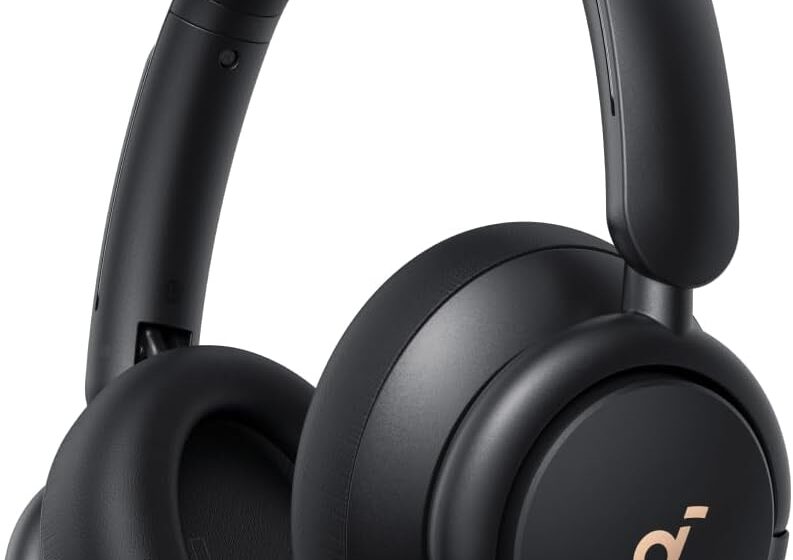
The Life Q30 headphones are designed as an over-ear model, which typically allows for larger ear cups and a more immersive listening position. According to the product information, the build focuses heavily on comfort for extended use. The ear cups are described as featuring ultra-soft protein leather with memory foam padding. Protein leather is often used in this category for its soft texture, and when paired with memory foam, the intention is clearly to create a snug yet forgiving seal around the ears. The stated goal is to fit snugly over the ears while maintaining a lightweight build, which is a practical consideration for anyone who plans to wear headphones for long stretches, such as during a full workday or a lengthy flight.
The overall weight is listed at 264g. While this is a specific figure, it is presented in the context of a lightweight design intended for long listening sessions. The physical controls and button layout are not detailed in the provided information, so it is best to assume a standard over-ear configuration without speculating on specific switch placements or materials beyond the ear cup padding.
Hybrid Active Noise Cancellation Technology
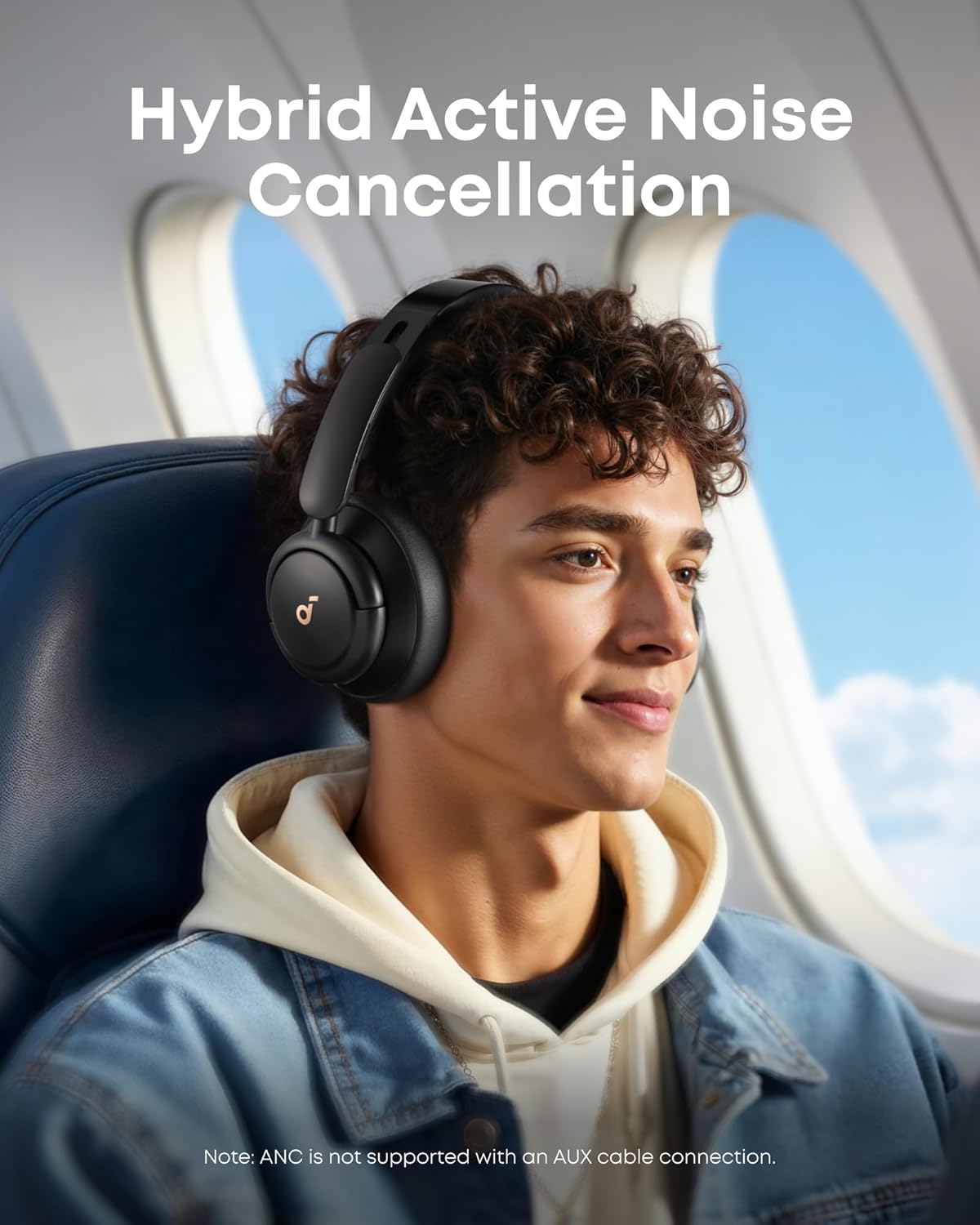
The headline feature of the Life Q30 is its hybrid active noise cancellation system. The term “hybrid” generally implies the use of multiple microphones to detect ambient sound, and here the description confirms that dual noise-detecting microphones are used to pick up and filter out low-frequency ambient noise. The stated performance claim is that this system can block out up to 95% of low-frequency ambient sound. This is a specific figure provided by the manufacturer, indicating a focus on reducing the constant, rumbling types of noise that are often the most tiring to listen to, such as engine noise or the drone of HVAC systems.
Rather than offering a single, one-size-fits-all noise cancellation setting, the Life Q30 provides three distinct ANC modes. This is a practical approach because noise environments vary significantly:
- Transport Mode: Designed to minimize the low-frequency noise associated with airplane engines.
- Outdoor Mode: Intended to reduce traffic and wind noise, which is useful for commuters or those walking in urban areas.
- Indoor Mode: Aimed at dampening the sound of busy offices, specifically mentioning the distraction of people talking in the background.
This level of customization allows the user to match the cancellation strength and focus to their immediate surroundings. It is important to note a specific limitation mentioned in the source material: the active noise cancellation function is not compatible with an AUX cable connection. This means that if you choose to use the headphones in wired mode, you will be relying on the passive isolation of the ear cups alone rather than the electronic noise cancellation.
Audio Quality and Hi-Res Support
On the audio side, the Life Q30 is equipped with 40mm drivers. The size of the driver is a standard indicator for over-ear headphones, but the material and design are what set the tone. The description highlights highly-flexible silk diaphragms within these drivers. The use of silk is a notable detail, as it is a material chosen for its ability to reproduce sound with a certain level of finesse. The stated sound signature is one of “thumping bass” alongside “crisp treble.”
The treble extension is rated up to 40kHz. This figure is significant because it exceeds the standard 20kHz limit of human hearing and is the key specification required for the Hi-Res Audio designation. The practical implication of this is that the headphones are engineered to handle high-resolution audio files that contain more data than standard CD-quality tracks, allowing the listener to potentially hear the “improved clarity” that these files can offer, provided the source device and music files support it.
It is worth noting that the description refers to “Hi-Res Music” and the ability to hear “every detail” of songs. While the 40kHz driver response is a stated technical capability, the overall listening experience will still depend on the quality of the audio source and the file being played.
Battery Life and Charging
Battery performance is often a deciding factor for wireless headphones, and the Life Q30 offers different figures depending on usage. In active noise cancelling mode, the headphones are stated to play for up to 50 hours. If you switch the ANC off and use standard mode, that playtime extends to up to 70 hours. This is a substantial amount of listening time, suggesting that most users would only need to charge the device once every week or two, depending on daily usage habits.
For those times when you forget to charge, the headphones support a quick charge feature. A short 5-minute charge is stated to provide 4 hours of listening time. This is a useful feature for topping up the battery right before a commute or a workout, ensuring that a dead battery does not necessarily mean a silent journey. The specific type of charging port (e.g., USB-C) is not mentioned in the provided information, so it is omitted here.
Call Quality and Connectivity
In addition to music playback, the Life Q30 is designed for communication. The headphones feature three microphones that work with an AI algorithm to enhance call clarity. The presence of multiple microphones is a common approach to beamforming and background noise reduction during phone calls. The “AI-Enhanced” descriptor suggests that the headphones use digital processing to isolate the speaker’s voice from surrounding noise, which is a stated feature aimed at making calls clearer in noisy environments.
Connectivity is handled through a Multipoint Connection. This feature is explicitly marked in the product comparison chart, indicating that the headphones can connect to two devices simultaneously. This is a highly practical feature for those who work between a laptop and a phone, allowing the user to switch from a video call on the computer to a phone call without manually disconnecting and reconnecting the Bluetooth.
Who Is This Product Best For?
Based on the features and design goals, the Life Q30 seems well-suited for a few distinct types of users. The long battery life and comfortable materials make them a strong candidate for frequent travelers, especially those who fly often and would benefit from the Transport ANC mode. The ability to switch to a 70-hour playback time in standard mode also appeals to anyone who wants to minimize the frequency of charging.
The three-mode ANC system also makes them a versatile option for office workers. The Indoor mode is specifically designed to dampen the sound of a busy office, including background conversation, which is a common distraction in open-plan environments. The Multipoint Connection adds to this utility, allowing the user to stay connected to both a work computer and a personal phone simultaneously.
Finally, the Hi-Res Audio support and the focus on detailed sound reproduction suggest that these headphones are intended for listeners who care about audio fidelity and may have access to high-resolution music streaming services or files.
Final Verdict
The Soundcore by Anker Life Q30 headphones present a well-rounded package centered on customizable noise cancellation and endurance. The hybrid ANC system with its three distinct modes offers a level of control that is often found on more expensive models, allowing users to tailor the listening experience to their environment. The battery life figures are notably high, particularly the 70-hour standard mode, which is a significant advantage for forgetful users or long-haul travelers.
The inclusion of memory foam and protein leather ear cups indicates a strong focus on comfort, which is essential for a device meant to be worn for hours. While the audio quality claims regarding silk diaphragms and 40kHz treble extension point towards a detailed sound profile, these are manufacturer specifications rather than tested performance metrics. The limitation that ANC does not function over a wired AUX connection is a specific caveat to keep in mind for users who plan to use the headphones in wired mode. Overall, the Life Q30 appears to be a thoughtful option for those prioritizing battery life, comfort, and a flexible approach to active noise cancellation.
View on Amazon